
Charlotte Retaining Wall Projects are Embracing New Materials for Stronger, Longer-lasting Landscapes
Charlotte, United States - March 5, 2026 / Main Street Retaining Walls /

Lately, though, retaining walls across Charlotte are starting to look different. The shift isn’t just about style. It’s about materials. Traditional options are being replaced with modern solutions that handle moisture better, last longer, and require less maintenance.
Contractors are paying closer attention to material choice because it directly affects strength, drainage, and longevity. As homeowners invest more in outdoor living, retaining walls now need to deliver both reliable performance and visual appeal.
What Materials are Charlotte, NC Retaining Wall Contractors Using Most Often Today?
Retaining wall construction has moved far beyond basic stacked blocks or railroad ties. Today, Charlotte contractors have access to a wide range of materials designed specifically for long-term performance in challenging soil and weather conditions.
Segmental Concrete Blocks
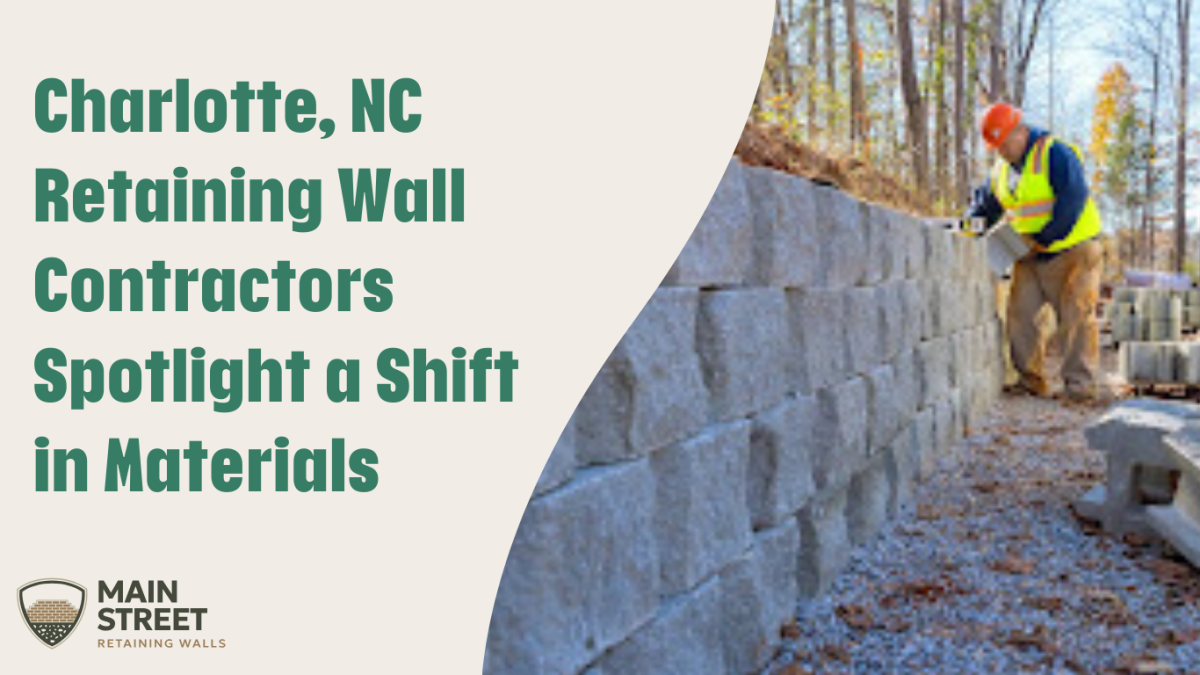
Segmental concrete block systems are one of the most commonly used modern retaining wall materials.
These blocks are engineered for retaining wall construction and offer:
Interlocking strength
Consistent sizing for clean installation
Multiple texture and color options
Built-in drainage compatibility
Charlotte contractors rely on these systems because they provide reliable structural support while allowing flexibility in design. The finished walls look clean, uniform, and intentional, making them suitable for both residential and commercial properties.
Natural Stone Veneer and Stone Blocks
Natural stone remains a popular option for homeowners who want a more traditional or high-end appearance.
Stone options include:
Granite
Fieldstone
Limestone
Stacked stone styles
When installed with modern reinforcement systems, stone retaining walls combine natural beauty with dependable strength. Many Charlotte homeowners choose stone to complement upscale landscaping or historic-style homes.
Poured Concrete Retaining Walls
For projects requiring maximum strength, poured concrete remains a reliable solution.
Poured concrete walls offer:
High load-bearing capacity
Smooth, modern finishes
Long lifespan when sealed properly
These walls are commonly used in commercial projects or residential properties with significant elevation changes where structural performance is critical.
Reinforced Timber Alternatives
While wood retaining walls still exist, contractors in Charlotte are moving away from traditional timber and railroad ties.
Modern reinforced timber alternatives provide:
Wood-like appearance
Better resistance to rot
Longer durability in humid climates
These materials offer the visual warmth of wood without the short lifespan associated with untreated timber.
Decorative Concrete and Hybrid Systems
Modern retaining walls are increasingly designed to complement outdoor living spaces.
Some contractors install:
Concrete blocks with decorative caps
Mixed stone and concrete systems
Walls designed to match patios and outdoor kitchens
Charlotte homeowners often want retaining walls that feel integrated into the landscape rather than purely functional barriers.
Why are Retaining Wall Contractors in Charlotte Shifting Away From Traditional Materials?
Older retaining wall materials are being replaced for several practical reasons. Contractors are responding to climate challenges, homeowner expectations, and updated building standards.
Climate Challenges Demand Better Materials
Charlotte’s climate places consistent stress on retaining walls, including:
Humid summers
Heavy seasonal rain
Occasional freezing temperatures
Soil expansion and contraction
Traditional materials often struggle under these conditions, leading to warping, cracking, or early failure. Modern materials are designed to handle moisture and soil pressure more effectively.
Homeowners Want Longer-Lasting Walls
Older retaining walls, especially those built with untreated wood, often require frequent repairs or early replacement.
Modern homeowners prioritize:
Longevity
Low-maintenance landscaping
Investment-grade outdoor improvements
Today’s retaining walls are expected to last decades, not just a few seasons.
Design Expectations Have Increased
Retaining walls are no longer hidden features. They now play a visible role in:
Outdoor living spaces
Backyard entertainment areas
Front yard curb appeal
Garden terraces
Modern block and stone systems provide a more refined look than older materials, helping walls enhance rather than detract from landscape design.
Code Requirements and Engineering Standards
Many retaining wall projects must meet stricter requirements related to:
Local building codes
Drainage design
Reinforcement for taller walls
Structural safety standards
Modern materials integrate better with engineered solutions, making compliance easier and safer.
Sustainability and Material Availability
Some traditional materials, particularly treated wood, raise environmental concerns and have limited lifespans.
Contractors increasingly prefer materials that are:
Recyclable
Locally sourced
More sustainable over time
Modern concrete systems often outperform timber when environmental impact is considered over the full lifespan of the wall.
 Are Modern Retaining Wall Materials More Durable in Charlotte’s Climate?
Yes, modern retaining wall materials generally perform far better in Charlotte’s climate than older options.
Moisture Resistance is a Major Advantage
With frequent rain and high humidity, moisture is one of the biggest threats to retaining wall integrity.
Modern materials such as:
Segmental concrete blocks
Sealed poured concrete
Composite alternatives
handle moisture far better than traditional wood walls, which can rot or degrade quickly.
Better Performance Under Soil Pressure
Retaining walls must withstand pressure from:
Saturated soil
Sloped terrain
Drainage buildup
Erosion forces
Modern interlocking systems are engineered to distribute this pressure evenly, reducing stress on individual components.
Reduced Cracking and Shifting
Many older walls fail due to outdated construction methods.
Modern systems often include:
Geogrid reinforcement
Proper gravel backfill
Integrated drainage solutions
Stronger structural design
These features help walls remain stable over time.
Improved Freeze-thaw Protection
While winters are mild, freeze-thaw cycles still occur.
Modern materials are built to resist:
Surface spalling
Expansion cracking
Premature breakdown
This improves long-term durability.
Longer Lifespan With Less Maintenance
Many modern retaining walls last 30 to 50 years or more when installed correctly. In comparison, wood walls may require replacement in under 15 years.
How Does the Choice of Retaining Wall Material Affect Cost and Maintenance in Charlotte, NC?
Material selection affects both initial cost and long-term expenses.
Upfront Cost Differences
In general:
Timber walls are often cheapest initially
Concrete block systems fall in the mid-range
Natural stone and poured concrete are higher-end
However, initial cost does not always reflect overall value.
Maintenance Considerations
Traditional materials often require ongoing upkeep, including:
Rot prevention
Replacement of warped components
Frequent repairs
Modern materials usually need minimal maintenance.
Concrete block walls may only require:
Occasional cleaning
Drainage inspections
Minor joint checks
Stone walls often require very little upkeep beyond proper drainage.
Long-term Cost Savings
Paying more upfront can reduce long-term expenses.
For example:
A timber wall may need replacement in 10–15 years
A segmental concrete wall may last 40+ years
The difference in replacement cost significantly impacts overall value.
Drainage and Installation Complexity
Some materials involve additional labor, such as:
Tall poured concrete walls
Stone masonry installations
Reinforced systems with geogrid
Site conditions and wall height often affect labor costs more than materials.
Aesthetic Value and Property Impact
Material choice influences curb appeal and property value by creating:
Cleaner landscaping lines
Tiered yard designs
Attractive outdoor living spaces
Many Charlotte homeowners see retaining walls as long-term landscape investments.
Matching the Material to the Project
The best material depends on:
Wall height
Drainage requirements
Soil conditions
Budget
Desired appearance
Experienced contractors help ensure proper selection.
Charlotte’s Retaining Wall Industry is Moving Forward
The shift in retaining wall materials across Charlotte reflects changing homeowner priorities. Strength, longevity, and appearance now matter equally. Contractors favor materials that perform reliably in the region’s challenging soil and weather conditions.
Modern retaining wall materials offer:
Better durability in humid climates
Improved drainage compatibility
Longer lifespans with less maintenance
Cleaner, modern aesthetics
Stronger engineered performance
Retaining walls are no longer built the old way. Charlotte contractors are embracing modern materials that shape stronger, more attractive landscapes throughout the city.
Build a Stronger, Modern Retaining Wall with Main Street Retaining Wall in Charlotte
If your Charlotte property needs erosion control, better drainage, or a more usable outdoor space, Main Street Retaining Wall is here to help.
We specialize in modern retaining wall materials, including engineered concrete blocks, natural stone systems, and reinforced builds designed for Charlotte’s humid climate and challenging soil conditions.
Our team treats every retaining wall as a long-term investment in safety, function, and curb appeal. From smart material selection to proper drainage-focused installation, we build walls that last.
Whether replacing an old wall or planning a new project, we provide dependable craftsmanship and guidance from start to finish.

Contact Information:
Main Street Retaining Walls
635 Atando Ave Suite F
Charlotte, NC 28206
United States
Daniel Hodges
(704) 961-9302
https://mainstreetretainingwalls.com/